


As a provider of high - power crushers, I've witnessed firsthand how the structure of these machines significantly impacts their crushing ability. In this blog, we'll delve into the various structural elements of high - power crushers and explore how they contribute to the overall performance of the equipment.
1. The Frame Structure
The frame of a high - power crusher serves as the backbone of the entire machine. It provides a stable foundation for all the other components and must be able to withstand the high forces generated during the crushing process. A well - designed frame is typically made of high - strength steel, which offers excellent rigidity and durability.
The shape and size of the frame also play a crucial role. A larger frame can accommodate more powerful motors and larger crushing chambers, which in turn can increase the throughput of the crusher. For example, a crusher with a wider frame can handle larger pieces of raw materials, reducing the need for pre - crushing.
Moreover, the frame should be designed to minimize vibrations. Excessive vibrations can not only cause damage to the crusher itself but also affect the quality of the crushed products. To achieve this, many high - power crushers are equipped with vibration - damping systems, such as rubber mounts or shock absorbers, which help to absorb and dissipate the energy generated during operation.
2. Crushing Chambers
The crushing chamber is where the actual crushing process takes place. Its design directly affects the crushing ability of the crusher. There are several types of crushing chambers, including jaw crushers, cone crushers, and impact crushers, each with its own unique structure and characteristics.
Jaw Crushers
Jaw crushers have a simple and robust structure. They consist of a fixed jaw and a movable jaw. The raw materials are fed into the chamber from the top, and as the movable jaw moves back and forth, it crushes the materials against the fixed jaw. The shape of the crushing chamber in a jaw crusher is usually V - shaped, which allows for efficient crushing of large - sized materials. The angle of the V - shaped chamber can be adjusted to control the size of the crushed products.
Cone Crushers
Cone crushers are designed for secondary and tertiary crushing. They have a conical crushing chamber with a mantle that gyrates inside the chamber. The raw materials are fed into the top of the chamber and are crushed between the mantle and the concave. The structure of the cone crusher allows for a more uniform crushing action, resulting in a higher - quality product with a more consistent particle size.
Impact Crushers
Impact crushers use the principle of impact to crush materials. They have a high - speed rotor with hammers or blow bars that strike the materials and throw them against the impact plates. The structure of the impact crusher allows for a high reduction ratio, making it suitable for crushing hard and brittle materials. The design of the impact plates and the rotor can be optimized to improve the crushing efficiency.
3. Rotor and Hammer Design
In crushers such as impact crushers and hammer mills, the rotor and hammer design are critical factors in determining the crushing ability. The rotor is the rotating part of the crusher that drives the hammers or blow bars. A well - balanced rotor is essential to ensure smooth operation and prevent excessive vibrations.
The shape and size of the hammers or blow bars also affect the crushing performance. Larger hammers can generate more impact force, which is suitable for crushing larger and harder materials. However, they also require more power to operate. On the other hand, smaller hammers can provide a more precise crushing action, resulting in a finer product.
The arrangement of the hammers on the rotor is also important. A proper arrangement can ensure that the materials are evenly distributed and crushed throughout the chamber, improving the overall efficiency of the crusher.
4. Screening and Classification Systems
Many high - power crushers are equipped with screening and classification systems. These systems are used to separate the crushed materials into different sizes. The structure of the screening and classification systems can have a significant impact on the final product quality.
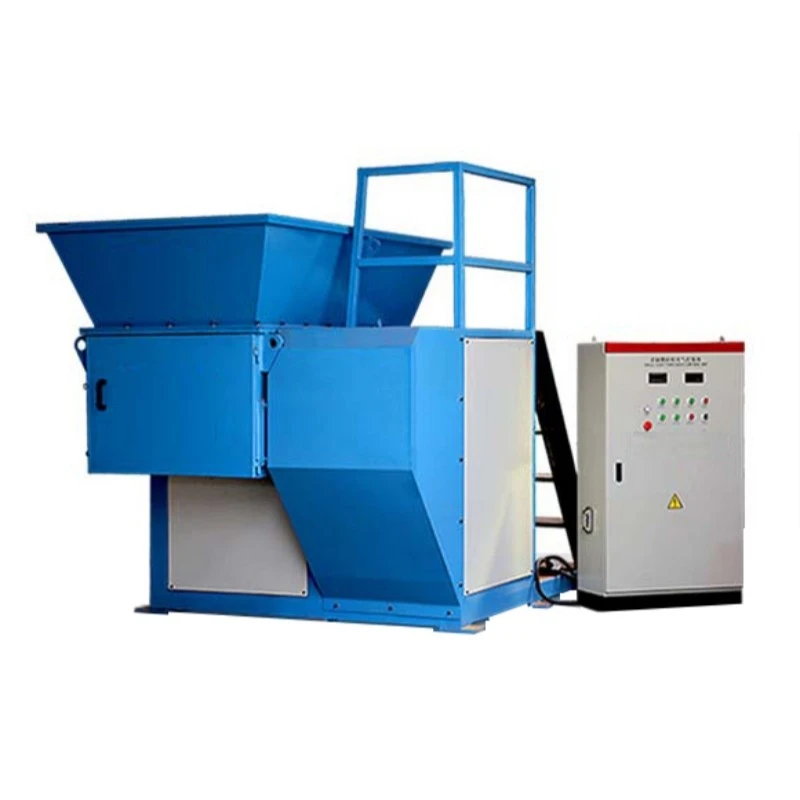

A well - designed screening system can accurately separate the materials based on their particle size. This is important for applications where a specific particle size distribution is required. For example, in the construction industry, different sizes of crushed stones are needed for different purposes, such as concrete production and road construction.
The type of screening media used also affects the performance of the screening system. Common screening media include wire mesh, perforated plates, and polyurethane screens. Each type has its own advantages and disadvantages, and the choice depends on the specific application and the characteristics of the materials being crushed.
5. The Role of Automation and Control Systems
Modern high - power crushers are often equipped with advanced automation and control systems. These systems can monitor and adjust the operation of the crusher in real - time, optimizing the crushing process and improving the overall efficiency.
The structure of the automation and control systems includes sensors, controllers, and actuators. The sensors are used to measure various parameters such as the temperature, pressure, and power consumption of the crusher. The controllers process the data from the sensors and send signals to the actuators to adjust the operation of the crusher, such as the speed of the rotor or the feed rate of the materials.
Automation and control systems can also improve the safety of the crusher. For example, they can detect abnormal conditions such as overloading or blockages and automatically shut down the crusher to prevent damage.
The Impact on Crushing Ability
The combined effect of all these structural elements determines the crushing ability of the high - power crusher. A well - designed crusher with a strong frame, an optimized crushing chamber, a well - balanced rotor and hammer design, an efficient screening and classification system, and advanced automation and control systems can achieve high - quality crushing results with high throughput and low energy consumption.
For instance, if you are looking for a crusher to handle EPS foam, our EPS Foam Crusher is designed with a special structure to efficiently crush and compact the foam. Its unique crushing chamber and rotor design ensure that the foam is crushed into small particles with a high reduction ratio.
If you need to crush bulk materials, our Bulk Material Crusher is a great choice. It has a robust frame and a large - capacity crushing chamber, which can handle large - volume materials with ease.
For industrial plastic shredding, our Industrial Plastic Shredder is specifically designed to break down plastic materials into smaller pieces. Its sharp blades and powerful motor ensure efficient shredding.
Conclusion
In conclusion, the structure of a high - power crusher has a profound impact on its crushing ability. By carefully designing and optimizing each structural element, we can develop crushers that meet the diverse needs of different industries. If you are interested in our high - power crushers and want to learn more about their performance and applications, or if you have specific requirements for your crushing operations, please feel free to contact us for a detailed discussion. We are committed to providing you with the best - in - class crushing solutions.
References
- S. K. Sinha, "Crushing and Screening Handbook", Minerals Engineering International, 2008.
- J. A. Herbst, "Principles of Comminution", Society for Mining, Metallurgy, and Exploration, 2015.
- R. A. Finch, "Size Reduction", SME Mining Engineering Handbook, 2011.


