


Hey there! As a supplier of industrial plastic granulators, I often get asked about the shrinkage rate of the granules produced by our machines. It's a crucial topic, especially for those in the plastic manufacturing industry, as understanding the shrinkage rate can significantly impact the quality and cost - effectiveness of the final products.
First off, let's talk about what shrinkage rate actually means. In the context of plastic granules, the shrinkage rate refers to the percentage reduction in the size or volume of the granules after they've been formed and cooled. This happens because plastics have a tendency to contract as they solidify from a molten state.
There are several factors that can influence the shrinkage rate of plastic granules. One of the most significant factors is the type of plastic being used. Different plastics have different molecular structures and properties, which affect how they shrink. For example, polypropylene (PP) generally has a relatively high shrinkage rate, often ranging from 1.0% to 2.5%. On the other hand, acrylonitrile - butadiene - styrene (ABS) has a lower shrinkage rate, typically around 0.4% to 0.7%.
The processing conditions also play a huge role. The temperature at which the plastic is melted and the speed at which it's cooled can greatly impact the shrinkage rate. If the plastic is cooled too quickly, it may not have enough time to fully crystallize, leading to a higher shrinkage rate. Conversely, if the cooling process is too slow, it can result in a more uniform shrinkage but may also increase production time and cost.
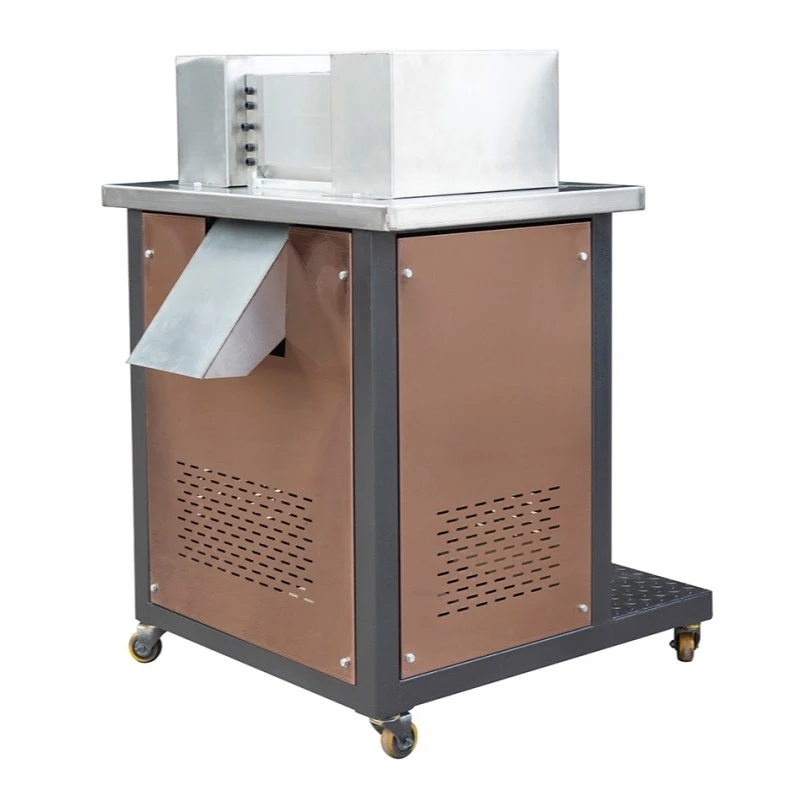
Our industrial plastic granulators are designed to minimize the shrinkage rate and ensure consistent quality. We offer a range of machines, including the Closed Chamber Pelletizer, which provides a controlled environment for the granulation process. This helps to regulate the temperature and cooling rate, reducing the variability in shrinkage.
The Heavy - duty Plastic Granulator is another great option for large - scale production. It's built to handle high - volume processing while maintaining a stable shrinkage rate. This machine is equipped with advanced technology that ensures precise control over the granulation process, from melting to cutting.
And then there's the Automatic Plastic Cutter. This tool is essential for creating uniform granules. A proper cutting mechanism is important because unevenly cut granules can lead to inconsistent shrinkage. Our automatic plastic cutter is designed to make clean, precise cuts, which helps to keep the shrinkage rate in check.

To measure the shrinkage rate accurately, we use a combination of methods. One common approach is to measure the dimensions of the granules before and after cooling. We can then calculate the percentage change in size. Another method involves using specialized equipment that can analyze the density and volume of the granules.
In addition to the technical aspects, it's also important to understand how the shrinkage rate affects the end - use of the plastic granules. For example, in injection molding applications, a high shrinkage rate can cause warping or dimensional inaccuracies in the final product. This can lead to rejects and increased production costs. By controlling the shrinkage rate, we can help our customers produce high - quality products with fewer defects.
We've worked with many customers over the years, and we've seen firsthand how understanding and controlling the shrinkage rate can make a big difference in their operations. For instance, a customer who was struggling with high reject rates in their injection molding process was able to significantly improve their quality after switching to our industrial plastic granulators. By reducing the shrinkage rate, they were able to produce more consistent parts and save on material costs.
If you're in the market for an industrial plastic granulator and want to learn more about how to control the shrinkage rate of your plastic granules, we're here to help. Our team of experts can provide you with detailed information about our machines and how they can meet your specific needs. Whether you're a small - scale manufacturer or a large industrial operation, we have the right solution for you.
Don't hesitate to reach out to us if you have any questions or if you're interested in discussing a potential purchase. We're always happy to have a chat and see how we can assist you in achieving the best results with your plastic granulation process.
References
- Plastics Engineering Handbook, various editions
- Journal of Plastic Processing Technology, multiple issues
- Industry reports on plastic granulation and shrinkage rates


